Tuesday, March 5, 2013

Choi Melancholy Death of Oyster Boy - Anchor Baby

Anchor Baby

Anchor Baby is a story that contains several aspects of Tim Burton’s emotional isolation and loneliness. The female character of this story is an outsider in many senses. Firstly, she is physically isolated from rest of the characters of the story (the band), as she comes from the sea while the band plays ashore. She also can never really get close to the band, but instead just wanders around them. Secondly, she is not only physically but also emotionally detached from rest of the characters in the story. In the book, it clearly says “But throughout their lives they never connected. She wandered the earth alone and rejected.” Tim Burton states her emotional detachment from other characters in plain language. Her loneliness probably is a reflection of Tim Burton’s alienated and lonely childhood, as Burton has also never felt connected with his parents or the suburbia that he grew up in. The female character desperately tries to fit in and tries to find a place to belong in the little “society” in the story, but none of them worked, and at last, she chose to have a baby just to be connected to her lover, Walker. Such extremeness of her actions only enhances the idea of abandonment and desperate attempt to fit in, as they clearly shows the audience that she is willing to do anything to find a sense of belonging. However, she later realizes that she is truly abandoned when Walker literally walks away from her, and her love remains unrequited. This story is almost shockingly dark, and bends the traditional Jungian archetypes. There are no heroes, kings, devils or barbarians, but only shadows of the characters. The shadows in this story are portrayed both directly and indirectly. The female character’s loneliness and abandonment is her shadow, and the man’s irresponsible act of leaving his child and the child’s mom behind is his shadow. The baby is also representative of the shadow of both the male and female characters, as neither the mom nor the dad loves and cares for him. 

Friday, February 15, 2013

Choi Mardi Gras


The word ‘carnival’ generally carries a positive vibe, and the people of New Orleans has indeed proved to the world that Mardi Gras is an occasion of joyful celebration where everyone gets to shed their worries off and enjoy the present.

I went to the uptown parades this Mardi Gras and sure enough, I had the greatest time with my dearest friends. Having no carnival or parade experience at all, I did my best to get the most out of the first carnival of my life, screaming like a mad man in front of floats for beads. That was quite the enjoyable experience to say the least, but the happiness I felt from acquiring the beads was only skin-deep.

I think the true soul of Mardi Gras lies within the heartfelt happiness and the positive energy that everyone carries and willingly shares. Such flow of energy within the crowd enables strangers to become friends, creating the ultimate carnival experience. The affection and friendliness of New Orleans can be deeply felt from the smallest things. For example, a lady gave me beads when I didn’t get anything from one of the floats, and I jumped on to the edge of one of the float-towing trucks and sparked up a conversation with the driver, who was nothing but friendly despite my rather blatant behavior. Any city in the world can create flamboyant, eye-catching floats, but no other city can recreate the kind of honest energy that New Orleans carries.

On the other hand, we always have to keep in mind that New Orleans is a beast. It can either treat you very well, or bring you down hard and fast if you don’t look out for yourself. One night I was at a bar called One Eyes Jacks, located half a block away from Bourbon, checking some music out. At the very same time, 4 people got shot in Bourbon, which I was totally oblivious to. One other potentially dark aspect of carnival is its abundance of freedom. A lot of people that I’ve talked to over Mardi Gras shared one common feeling – that they are allowed to do whatever they want to do. Such excessive freedom can be detrimental to some people, as their moral boundaries may temporarily be blurred, making them do things they normally wouldn’t do. Although freedom can be an excellent way to enjoy carnivals, there is a need for people to constantly re-evaluate and check if they are crossing their own moral, ethical boundaries.

And Bob Dylan is right!
Overall, my first Mardi Gras experience has been a very positive one, but I’ve also realized that things can go down if you don’t have control over what you are doing. There is a fine line between having a lot of fun and having way too much fun, and unpleasant things can happen if we don’t have a good concept of where that line is. Will I join Mardi Gras again next year? Yes, most definitely. It’s so much fun!

Friday, February 8, 2013

Choi Edward Scissorhands


The world today is full of violence that comes in many different forms. People exercise violence against other people not only in real life, but also through Internet, phone and other means of telecommunication. Because modern technology made the world more connected as a whole than ever, it has become that much easier for people to abuse such connectivity and exhibit violence against others. It seems, in these modern days, that people are being violent just for the sake of being violent, without much sense of purpose or morality involved.

Tim Burton did an excellent job at criticizing such aimless, irrational violence of the contemporary world through Edward Scissorhands. Edward is abused and exposed to violence in several ways throughout the movie, being taken advantage of by people around him. Joyce used Edward’s innocence to sexually manipulate him, and Kim’s boyfriend, Jim abuses Edward’s exceptional lock picking skills to break into his own house, leaving Edward behind when the alarm went off.

Burton’s hatred for suburbia is also cleverly integrated into the movie. Although the neighborhood the story takes place in seems neat and clean on the outside, people are incapable of thinking or behaving independently, and blatantly follows what everyone else is doing, just like sheep in a herd. Such downside of suburbia is clearly portrayed in the scene where all the men goes golfing at the exact same time, with the exact same outfit and the exact same cars. The women in the town is very caught up with gossiping, with exception of the religious fanatic Esmeralda, and are easily manipulated by words of others because they don’t want to feel like they are falling behind, and they want to belong in a crowd. In other words, the residents of that neighborhood don’t like or want changes, and no one wants to be the odd one out.

Furthermore, Burton showed how contemporary technology could be abused to aid violence. Most of the women in the story are always on the phone gossiping and spreading words that might not necessarily be true, and later on the movie such misuse of telecommunication contributes to the widespread misunderstanding of Edward’s ‘misdemeanor’.

Shredding dat hair....!!
The town’s un-accepting attitude towards change and difference made Edward into a ‘monster’, and such reckless silent violence showed the audience that the only lesson that can be learnt from this contemporary violence is non-violence.

Saturday, February 2, 2013

Choi Batman Returns

This guy would have been hell of a mayor


Penguin and Batman are very different characters and yet, the stories of their lives show striking resemblance with each other. Batman’s parents were shot dead by bandits right in front of his eyes when he was only a kid, and Penguin was abandoned by his own parents at birth due to the disfigurement of his hands. Bruce Wayne and Oswald Cobblepot both seek an outlet, a way to compensate themselves for the trauma they’ve experienced in their childhood, and try to achieve their goals through their alter ego, Batman and Penguin. Each of those alter ego represents the hidden, dark side of their true selves, and the times they wear their ‘masks’ are the times they struggle to find an answer to that one simple question that everyone has: “Who am I?”

While both Bruce and Oswald are on the quest for finding their true nature, the trajectory of their ‘career’ turns out to be quite different. Batman serves as the ‘dark knight’ of Gotham, fighting criminals in the dark alleys of the city, trying to prevent heinous crimes that devoured his entire life. On the other hand, Penguin tries to impose the pain he suffered onto other people by drowning all the first-born child of Gotham in the sewers. As can be seen, the conflict in Batman Returns arises from two people with different mentality dealing with similar problems. Batman tries to prevent others from suffering what he had been through, but Penguin wants people to suffer the same fate that he was forced to suffer.  The conflict between Penguin and Batman may seem like any other hero vs. villain story, but the fact that they both have similar, if not almost identical, underlying personal traumas makes their binary opposition all the more interesting.

As mentioned, Batman and Penguin carries out their introspective journey in very different ways. Batman is more focused on getting self-satisfaction through fighting crime, when Penguin constantly seeks approval from other people. For example, when Penguin sabotaged Batman, the citizens of Gotham starts turning against the caped hero. However, Batman does not actively try to redeem his public image, because he knows that his way of introspection lies within fighting crimes and preventing tragedies, and not within the love he gets from the people. On the other hand, Penguin seeks praise and approval from the public, and this becomes immediately apparent when he stages the saving of mayor’s baby to rise as Gotham’s ‘hero’. This clearly shows his desire for love and attention, especially since he was abandoned since he was a baby.

It is Batman and Penguin’s difference in personality created by similar life story that brings about the interesting conflict that occurs in the movie. If both of them were like either of them, such interesting story would not have been created.

Friday, January 25, 2013

Choi Batman Response


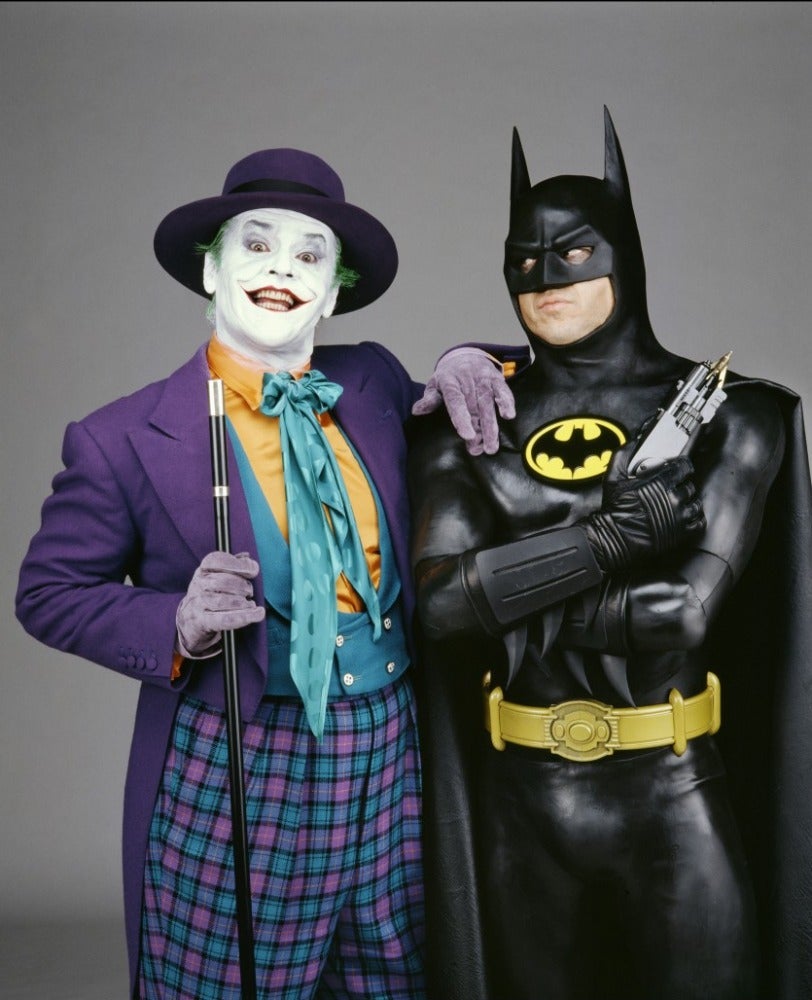
Tim Burton clearly integrates a number of elements of Film Noir in Batman. Batman conforms to the traditional Film Noir style in terms of mood, style, conflicted heroism, and urban modernity, but at the same time undermines the style in its use of female figure.

The mood and style of Batman is set from the very beginning of the movie, the opening credit. The lighting is rather dark and low key, which complements the dark and rich shadows that fill the screen. Such use of lighting is further exploited throughout the movie, especially in the scenes where Gotham city is shown. Gotham city is depicted as a place with generally dark and heavy atmosphere, where there is barely any natural light from the sun, and the alleys engulfed by nothing but shadow and darkness. The mood radiated by the city is very mentally distorting, and gives its audience a strong sense of claustrophobia, neatly falling into the style of Film Noir.

Gotham in itself is a crucial element of Batman that carries the spirit of film noir. It’s an exaggerated, yet a classic representation of modern day city - highly industrialized, heavily polluted, corrupted, and crime infested. While the buildings are tall, modern and somewhat magnificent, there is always a hint of darkness that haunts and lingers in every corner, every building of the city, creating a strong sense of alienation and isolation, keeping the audience mentally off-balanced. Such expressionistic portrayal of Gotham city clearly is Tim Burton’s conscious effort to allow Batman to lean into the territory of film noir.

The depiction of Bruce Wayne is another element of film noir integrated into Batman. While it is very clear that Batman stands on the good side, he can also be considered an anti-hero. He is not loved, he works in the shadows, and although he has very clear set of moral codes of his own that he follows, he yet is considered an outlaw by many. Furthermore, Bruce Wayne is very mentally unstable due to him witnessing his parents’ death as a child. On the surface, he is a perfectly normal and respectable gentleman but in the inside, he seeks an outlet for his anger and terror induced by the tragic event. Batman is the one outlet that Bruce Wayne has, and the element or noir is shown in such a conflicted personality that Bruce Wayne/ Batman carries.

Best friends forever?
One thing that doesn’t conform to the classic elements of noir is Vicky Vale. She is just a normal career woman who isn’t seductive, does not abuse the male character for wealth or power, is not dangerous, and though beautiful, not necessarily glamorous. Tim Burton undermines film noir in use of such a normal, rather insignificant female character, which is quite interesting as a lot of elements in Batman charters the territory of film noir.

Tuesday, January 22, 2013

Choi Beetlejuice response


Why does America refuse the idea of death? Compared to many other civilizations around the world such as China or Korea, America has a very short history. China has developed over a course of a few thousand years, whereas America was declared independent only 237 years ago. Despite being such a young nation, America has achieved a lot over a very short period of time which is nothing but remarkable. On the other hand, such rapid change and progress could have entrapped the minds of Americans in the “present”. Since everyone was busy playing their parts in helping the young country develop, there surely would have been less room for people to think about neither the past nor the future (in terms of afterlife), needless to say that they did not have the chance to acquire the laid back, somewhat optimistic approach to death that some “experienced” countries with long history have. America is a nation that did not experience too much history or change, and therefore people are afraid of changes, and love being in the present. Death, being the one greatest change in our lives, is not the kind of thing that Americans would love.

Having said that, the view on death imposed by Beetlejuice can be described as the epitome of such stable, unchanging way of life that many Americans prefer and live. Upon death, the Maitlands have a hard time comprehending what happened to them. When they realized that they are dead, their first and most natural instinct was to go back to where they were in life, not accepting the fact that they were dead. They did not want to leave their house (although they couldn’t even if they wanted to), they did not want intruders in their house, and they wanted nothing to change when everything has changed. Beetlejuice is a story built on that one great desire to seek stability in life. It could have been a story about the Maitlands going through a mystical and fantastic journey through the world of afterlife, but instead, Tim Burton chose to depict a couple seeking to retrieve their original lifestyle, although their life seemed pretty mundane and uninteresting to me.

The Maitlands
Well, I guess it doesn’t matter if afterlife is way more adventurous and interesting than life. The Maitlands just wanted their lives as they were, and change was something they didn’t want, no matter how dull and colorless their lives might be.

Tuesday, January 8, 2013

Choi Introduction

I am Jae Yun Choi from South Korea. I go by my last name, Choi, because non-Koreans have a hard time pronouncing my first name correctly and going by my last name just makes my life a whole lot easier. I have been living in my hometown, Seoul, until I was 6 and moved to Shanghai, China in 1999 and lived there for almost 13 years. Now I am here in Loyola New Orleans studying jazz guitar, but my love towards jazz is significantly smaller compared to my love towards blues and rock, as I have an insane obsession toward Pink Floyd and Steely Dan.

I feel very privileged to be here in birthplace of jazz because the overall music scene in Shanghai and Korea is just substandard in terms of both quality and quantity. The music scene of New Orleans simply supersedes the music scenes of China and Korea combined not only in quantity and quality, but also diversity. In the past few month of my stay in this city, I have already been to more concerts and seen more maestros of music than I have in my entire life.

I have very little interest in things other than music, but movie is not one of them. In college, my brother studied Broadcasting & Entertainment, which essentially falls into the field of filming, and his love toward films and movies aroused the same interest in me. Watching movies is one of my favorite, if not the favorite time killing activity. Sci-Fi, Fantasy, Horror, Thriller movies are some of my favorites but I like crazy odd, mind twisting, out of the ordinary movies such as Alice in Wonderland and Corpse Bride more than anything else. To be honest those two are two of the very few Tim Burton movies I have watched, and I didn’t even enroll in this course myself but I am still looking forward to have a great time watching some Tim Burton, and to find out more about him as a movie director but also as an artist. It is always interesting getting to know a crazy figure such as himself.